Rear Suspension Defect Affecting Certain Toyota Grand Highlander and Lexus TX Models
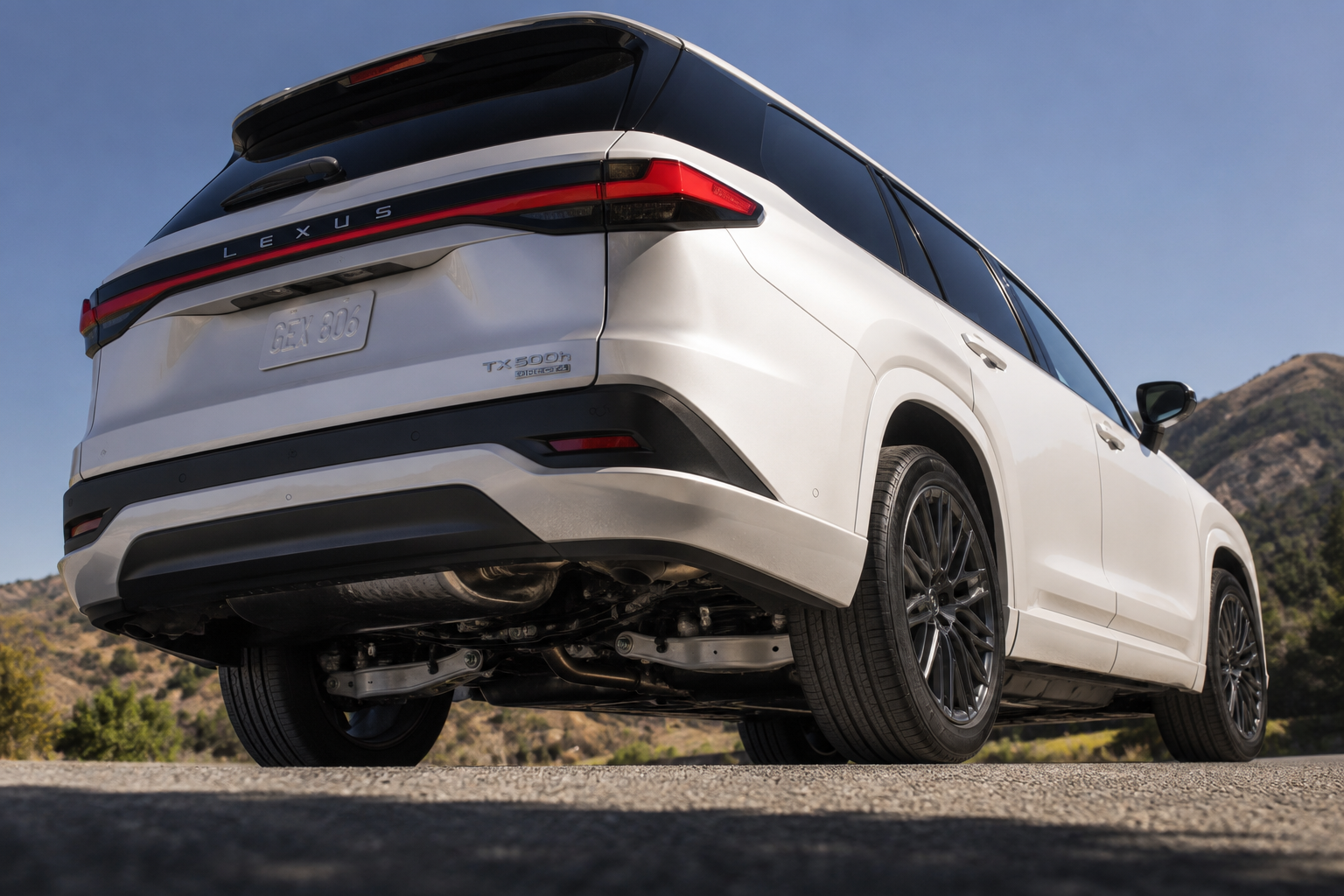
Toyota has announced a safety campaign involving 5,408 vehicles after discovering a manufacturing defect that could affect the strength of a critical rear suspension component.
The issue impacts select 2026 Toyota Grand Highlander and 2026 Lexus TX models and, in certain situations, could reduce vehicle stability and increase the risk of a collision.
Which Vehicles Are Affected?
The problem involves certain vehicles from the following 2026 model lines:
- Toyota Grand Highlander
- Toyota Grand Highlander Hybrid
- Lexus TX
- Lexus TX Hybrid
- Lexus TX Plug-In Hybrid
What Is the Defect?
The issue involves the rear axle carriers, forged aluminum components that play an important role in supporting the vehicle's rear suspension.
Toyota discovered that some rear axle carriers were manufactured with insufficient material strength due to an error during the supplier's production process.
If one of these weakened components breaks where it connects to the toe control arm, the vehicle may lose proper rear wheel alignment control.
A failure of this component may result in:
- Reduced rear vehicle stability.
- Loss of rear toe control.
- Increased risk of a crash under certain driving conditions.
Although the defect is expected to affect only a limited number of vehicles, Toyota determined that corrective action was necessary to address the potential safety concern.
How Was the Problem Discovered?
Interestingly, this defect was uncovered during routine supplier quality inspections rather than through customer complaints.
April 2026
A Tier 2 supplier noticed abnormal machining characteristics while processing rear axle carriers received from a Tier 1 supplier.
Hardness testing revealed that certain components did not meet Toyota's engineering specifications. The findings were immediately reported, prompting a joint investigation between Toyota and its suppliers.
May Through June 2026
Engineers examined production records and tested affected components from supplier inventory.
Their investigation revealed that some batches of rear axle carriers had bypassed the required ageing furnace process, a heat-treatment step that gives the forged aluminum its required strength.
Further laboratory testing and computer-aided engineering (CAE) analysis confirmed that these parts exhibited lower tensile and proof strength than intended.
Engineers also determined that, if a failure occurred, it would most likely happen at the toe control arm attachment point.
Toyota concluded that such a failure could reduce rear suspension control and compromise vehicle stability, particularly during certain driving conditions.
July 2, 2026
After completing its engineering analysis, Toyota launched a voluntary safety campaign to correct the manufacturing defect.
As of June 30, 2026, the company reported:
- No field technical reports related to this issue in the United States.
- No U.S. warranty claims associated with the condition.
The decision was therefore based on engineering analysis and supplier quality findings rather than widespread failures in customer vehicles.
What Owners Can Expect
Toyota dealers will inspect the identification code on the rear axle carrier sub-assembly to determine whether the vehicle contains one of the affected parts.
If necessary, the rear axle carrier sub-assemblies will be replaced at no cost to the owner.
Owner notification letters are expected to begin mailing on August 23, 2026.
Safety Campaign Details
- Manufacturer: Toyota Motor Engineering & Manufacturing
- Vehicles Potentially Affected: 5,408
- Component: Rear Axle Carrier / Rear Suspension
- NHTSA Campaign Number: 26V-437
- Toyota Campaign Numbers: 26TB13, 26TA13, 26LB08, and 26LA08
Bottom Line
Although Toyota has not received any reports of crashes, injuries, or warranty claims related to this manufacturing defect, the company is taking proactive steps to prevent future problems.
Owners of a 2026 Toyota Grand Highlander, Grand Highlander Hybrid, or 2026 Lexus TX should watch for their notification letter beginning in late August or check their VIN through Toyota, Lexus, or the National Highway Traffic Safety Administration to determine whether their vehicle requires inspection.
Addressing the issue promptly will help ensure the rear suspension performs as designed and maintains the stability drivers expect from these vehicles.