Honda and Acura Defective Airbag Sensor
Honda and Acura owners should be aware of an important safety defect affecting nearly 99,000 vehicles across multiple model years. The recall involves a defective front passenger seat weight sensor that could cause airbags to deploy when they should remain suppressed, potentially increasing the risk of injury to children and smaller occupants.
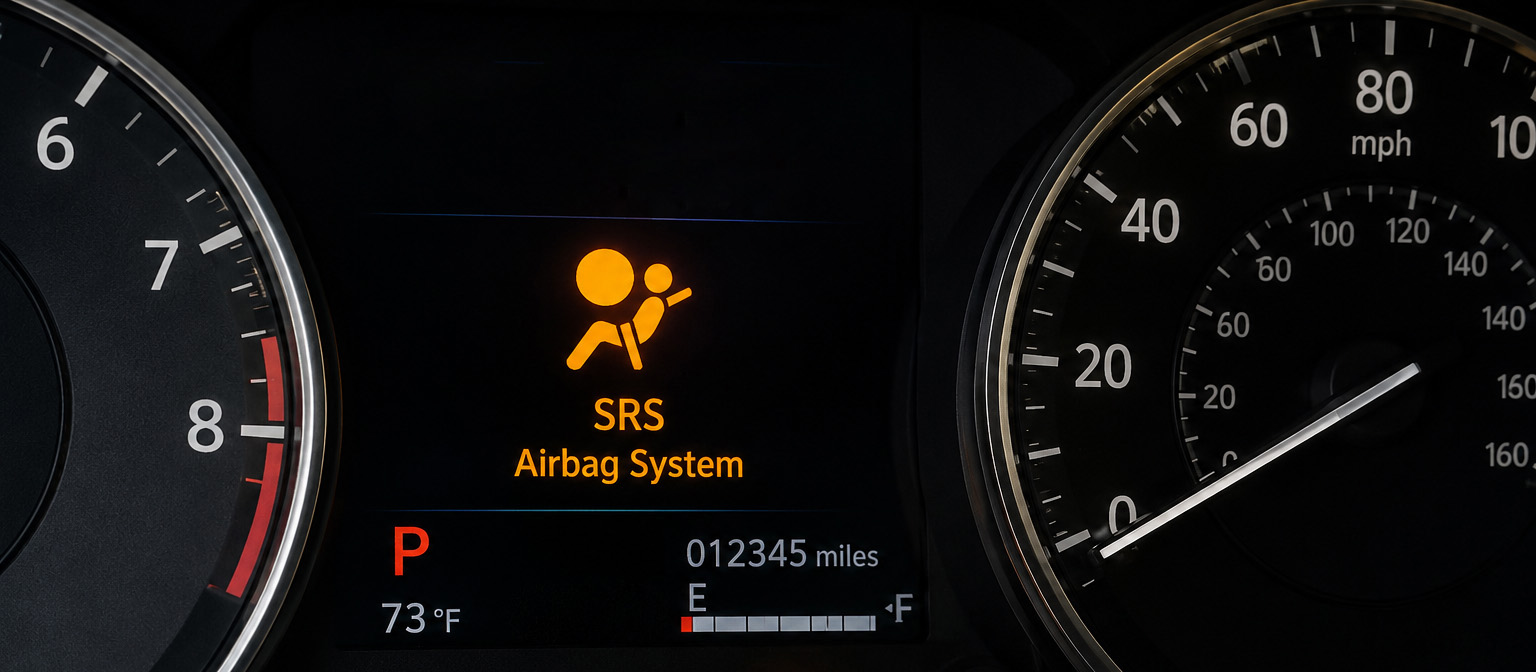
Honda Airbag Recall Overview
According to NHTSA Campaign Number 26V-332, Honda has recalled approximately 98,892 vehicles due to a defect in the front passenger seat weight sensor system.
The issue stems from a component inside the sensor that can crack and develop an electrical short circuit when exposed to environmental humidity over time. When this occurs, the vehicle's Supplemental Restraint System (SRS) may incorrectly determine whether the front passenger seat is occupied by an adult, child, or infant in a child safety seat.
As a result, airbags that should be suppressed may deploy during a crash.
What Is the Safety Risk?
Modern vehicles use sophisticated occupant detection systems to determine whether airbags should deploy.
If the defective seat weight sensor malfunctions, the front passenger frontal airbag and knee airbag may deploy even when:
- An infant is seated in a child safety seat.
- A young child is occupying the seat.
- A smaller passenger is present whose airbag deployment should be suppressed.
Airbag deployment under these circumstances can increase the risk of injury during a collision.
Fortunately, as of May 14, 2026, Honda reported no injuries or deaths associated with this defect. However, the company has received 228 warranty claims related to the issue.
Vehicles Included in the Recall
The recall affects the following Honda and Acura models:
Acura Vehicles
- 2018-2021, 2023 Acura TLX
- 2019-2024 Acura RDX
- 2017-2020, 2022-2026 Acura MDX
Honda Vehicles
- 2017-2021, 2023, 2025 Honda Ridgeline
- 2017-2022 Honda Pilot
- 2019-2021 Honda Passport
- 2018-2026 Honda Odyssey
- 2019-2022 Honda Insight
- 2019-2021 Honda HR-V
- 2018-2020 Honda Fit
- 2020-2022 Honda CR-V Hybrid
- 2017-2022 Honda CR-V
- 2017-2018, 2021 Honda Civic Type R
- 2017-2021 Honda Civic Hatchback
- 2016-2020 Honda Civic Coupe
- 2016-2022 Honda Civic
- 2017-2022 Honda Accord Hybrid
- 2016-2022 Honda Accord
What Caused the Defect?
Honda's investigation traced the problem back to a natural disaster that disrupted operations at a supplier's manufacturing facility.
According to Honda, a tier-one supplier temporarily changed the base material used in the printed circuit board of the seat weight sensor after the disaster affected a tier-two supplier. Unfortunately, the alternative material was not adequately validated for long-term use in this application.
The substitute material could place additional strain on the circuit board, eventually causing a capacitor to crack. Once cracked, moisture and humidity exposure can lead to an internal electrical short circuit and sensor failure.
Why Is This Recall Expanding?
This recall expands Honda's earlier recall, NHTSA Recall Number 24V-064, which was announced in January 2024.
Honda later discovered additional affected vehicles after:
- A supplier miscalculated the production end date for defective parts.
- Incorrect data was used when matching defective components to specific vehicles.
- Verification procedures failed to identify certain vehicles repaired with defective replacement parts.
These errors resulted in thousands of additional vehicles being added to the recall population.
Warning Signs Drivers May Notice
Owners may notice one or more warning indicators before a failure occurs, including:
- Illuminated SRS airbag warning light
- Passenger airbag indicator remaining off unexpectedly
- Airbag system warning messages on the dashboard
Drivers who notice these symptoms should schedule service with their dealer as soon as possible.
What Will Honda Do?
Honda dealers will replace the affected front passenger seat weight sensor.
Owner notification letters are expected to begin mailing on July 6, 2026.
Honda has assigned the following recall identifiers to this campaign: BOL, WO9, OOA, WOM, XOH, NOC, POD, BOE, UOF, POB, EOG, AOI, QO8, TOJ, DO7, and SOK.
What Should Honda and Acura Owners Do?
If you own one of the vehicles listed above, you should:
- Watch for an official recall notice from Honda or Acura.
- Check your VIN for open recalls.
- Schedule the free repair as soon as parts become available.
- Pay close attention to any SRS or airbag warning lights.
Because airbag systems are critical safety components, owners should not ignore warning indicators related to the Supplemental Restraint System.
Defective Safety Systems and Consumer Rights
Vehicle safety defects involving airbags, seatbelt systems, braking systems, or steering components can significantly affect vehicle safety and reliability.
If your Honda or Acura has experienced repeated repair attempts for safety-related defects, you may have rights under your state's consumer protection laws, including lemon law protections.
An experienced lemon law attorney can help determine whether your vehicle qualifies for a refund, replacement, or cash compensation.
```